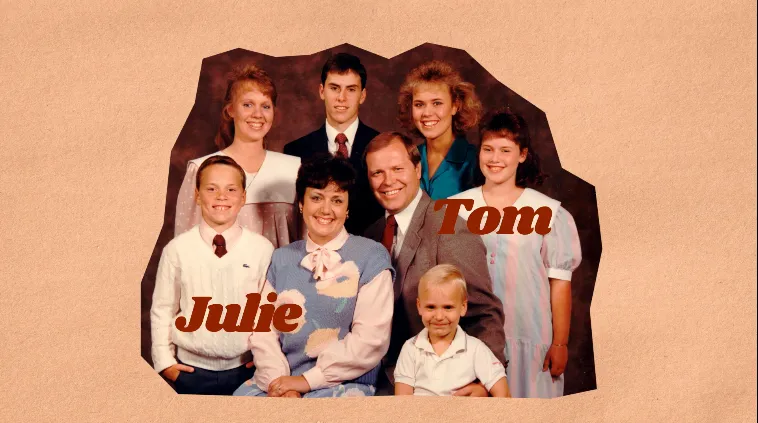
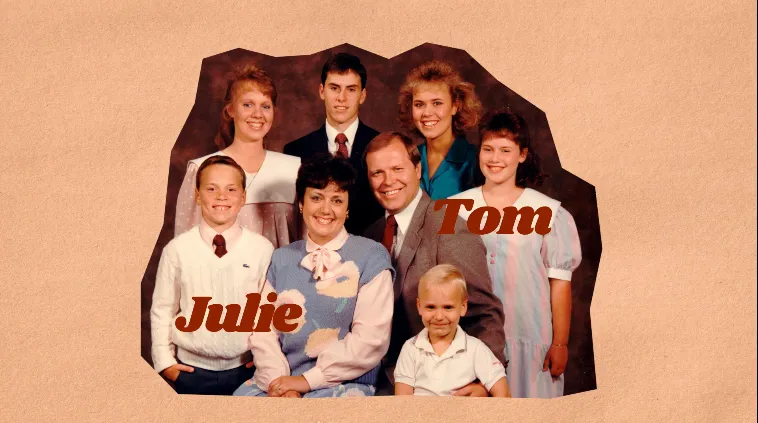
The Alexander's AKA Jeff and Rebecca Alexander are the parent's of No Sleeper founder, Jake Alexander.
High school sweethearts that grew up in the midwest wanting to get the hell out of the snow, made their way southwest to settle down in Arizona during the late 80's after Jeff got a job with the police department.
With no friends or family within a thousands miles they did exactly what everyone else would have done, had kids.
They had their first son, Josh in 1991, and their second son, Jake, in 1995. Rebecca also working full time as a hair stylist who also provided a priceless benefit to the family, free haircuts forever.
Here is an insight to their beliefs as parent's and how they raised Jake to be the person he is today.
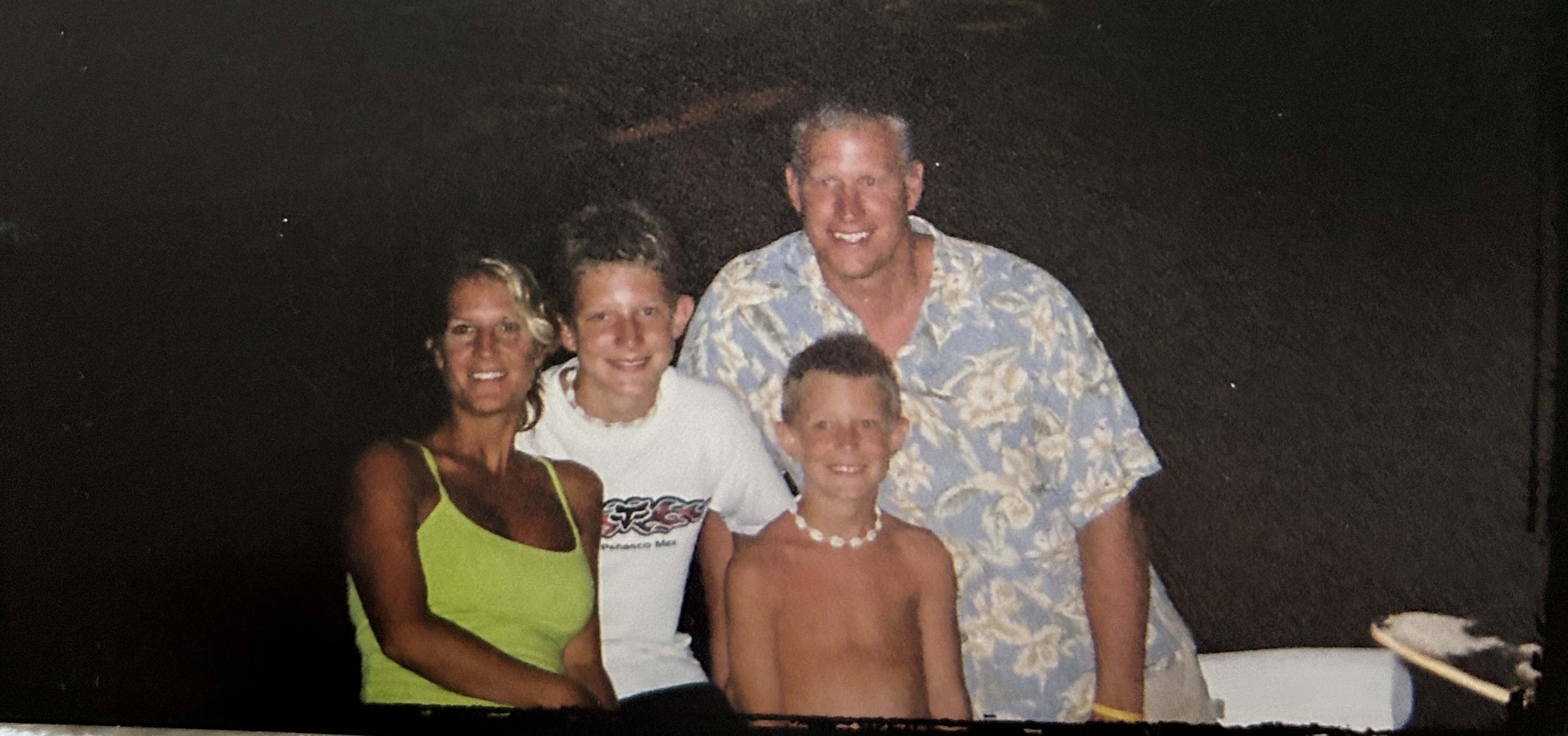
How was your relationship with your own parents?
Rebecca:
I thought we had a great, both of us had a great relationship with our parents. I felt like with me and five other siblings, it was a bit harder for them to be as involved as maybe they would have wanted to be. And they were both working. But they taught us how to have so much going on, and still be good parents at the same time.
Which I thought was the best lesson that I got from them, because there was so much going on, but they still loved
every one of us equally.
And I...I think what I took from my parents is that work ethic, and to be involved with the kids. It's very important to me.
Jeff:
I had a great childhood with both my mom and my dad. My dad was, you know, a very influential role model in my life. Just the way he handled me and my brother mostly. He could be, you know, he was strict. But yet, you know, We always knew where he was coming from.
He was very engaged. I can remember, you know, being in a Cub Scouts and making Pinewood Derby cars with him, and he invested a ton of time in that, and, you know, we wanted to win. He made a go kart, I wanted a go kart, it didn't have a motor, it was just, like, this wooden thing that we built that was pretty cool, and it had a rope, and you turned it with a rope, and I'd go down the neighborhood hill on that, me and my brother. And he made that for us .
Then I had a Schwinn bike that I wanted to turn into a chopper. So we got some metal bars, and he wasn't real, he wasn't real handy, but we, he, figured it out, and we, he put these metal bars on the forks of the bike, and I had this chopper, and wheels away down there, and it was cool.
And then just, you know, any event, any kid event, any athletic event, all the way through college football, freezing in, you know, northern Minnesota, going to football games, never missed a game. So, that was important for me.
I think, though, one thing that I learned that I wanted to do different with you guys is just always be encouraging. Not that my parents weren't, but they were, you know, they were Midwestern, born in the 30s. Not everything was great in their childhood, or just in the world. I don't think their philosophy was that you can be whatever you want to be. I never really got that.
I was into football, I played college football, and the NFL was everything. I didn't have the talent to get there, but, you know, they kind of never really said you could get there either.
So, I always wanted, in whatever endeavor you had, whether it was, you know, work, athletics, whatever, just encourage you to keep going until you just couldn't go anymore.
My parenting really is emulated for my dad. Everything I do, was kind of mirroring what he did.
Did you have a philosophy going in to parenting or did you go with your gut?
Jeff:
Jake was our second son, so going in with the first son, we didn't really have a clue, other than, again, I just fell back on my upbringing, and how I was raised, and how my mom and dad raised me and my brother and my sister. I just kind of wanted to emulate that.
So no solid game plan. I mean, we didn't read any books or anything, as far as I can remember, but I wanted to raise my kids the same way I was raised. That was always kind of the goal.
Rebecca:
That was our reference, our parents. And maybe a book or two here or there, but we didn't have any social media or anything to teach us other than what we were already taught growing up.
Did your kids have chores or jobs growing up? How did you handle money and work ethic?
Rebecca:
You did have jobs. You had to clean your room, clean the bathroom, help us with dinners, clean up, help us make the dinners. And then we would give you an allowance, or an that you could spend on what you wanted, but you had to have the money to buy something.
And we would help you out every once in a while, depending on what it was, but we felt that it was best that you learned the value of a dollar, and understood how little it can go, and how far it can go, because that is real life.
Jeff:
Yeah, and I think as you got older, and got more involved in baseball, for example, that was all year round and chewed up a lot of time. You could have gotten a job, and I think our trade off was, your mom and I just kind of agreed that, all right, if you're gonna do full time baseball, and that's what we would like you to do, then we would help you out with money and things like that, so that you didn't have to get a full time job. Because, quite frankly, baseball, at that point, was, well, baseball, football, all the sports, was a full time job.
Jake:
Do you guys remember when I used to pick up a dog poop? And there was one time where I threw it over our fence into the neighbors yard? I think I had to go over there and pick it back up.
Jeff:
We made you go pick it up, yeah. I forgot about the dog poop.
How did you handle discipline? Tell us about a time it didn't work?
Rebecca:
The one time that I didn't feel like it didn't work is when we spanked you. Because it didn't do anything other than let you know that hitting was okay. And it's not.
I feel I feel like I could have explained things better after a situation arose. And sometimes I did, and sometimes I didn't. But I felt like I could have done a better job with that.
Jake:
Do you remember what age this was? Was I young?
Rebecca:
Yeah. Probably 4 or 5.
Jeff:
Me, personally, when I was a kid, my dad spanked very rarely, and then when he did, he always came back, sat me down, and explained why I got a spanking, and then, said, I love you at the end. It's not personal. It's just, you screwed up.
And I think that when we did get physical with you, rarely, I think I tried to do that same thing. I don't know if you remember that or not.
But that was always... I agree with your mom, that never really worked for us.
I think... I can be fairly, uh, aggressive for lack of a better, better word. But I think, one thing that we struggled with was discipline. Your mom always said that, you know, "it's not what you say, it's how you say it", as I'm talking to you guys.
And I always said, "well, you missed the first two or three times when I had expressed my displeasure with you in one way, and then, gradually, it got more aggressive to the point where maybe I was yelling at you to stop doing whatever you're doing".
And we wouldn't always see eye to eye on that but, you know, you guys turned out great. So whatever we were doing, obviously worked.
Rebecca:
But I also felt like even though you were yelling, we could always come back and figure it out in the end between you and Dad.
You can yell at Jake, but then at the same time, I would talk to Jeff about what was going on and then also talk to Jake, and try to explain both sides.
So I would talk to Jake and try to explain Dad's side. And then I would talk to Dad and try and explain Jake's side, so that everybody could come together in the end, instead of being upset with each other. Even though sometimes that just happens, you're upset with each other, but I just feel like diffusing sometimes can be easier.
How did you praise Jake? Did you focus on effort, results, or talent? Did you think about it consciously?
Rebecca:
I think it's like anything else. When you do something well, there are ways to make you feel good about what you've done.
Jeff:
Yeah, I mean, I hope, I hope we did that. I mean, at least personally, I tried to do that all the time. I think it's super important to be supportive and, you know, tell your kids that they're doing a good job.
But in the same regard, I also think it's important to not sugarcoat stuff and also tell them when they didn't do a good job, or when they could have done better, or they didn't try hard enough.
So, I know it's a, it's always a, kind of a fine line there, because it's easy to see the negative, and it's sometimes hard
to see the positive. And sometimes the negative overwhelms the positive, and I know, personally, I struggled with that.
Especially in athletics. But always tried to, athletically, behaviorally, educationally, whatever. Always, tried to find something that you did well and encouraged that to continue on. Or if it was a single event that you did a good job on. Or that you worked hard, tried hard, even if he maybe didn't succeed, you tried hard.
I always tried to do that whether it came across or not, I'm not sure. That would be a question you'd have to answer, because I know it could get negative in there at times, too.
Jake:
Do you guys have an example of anything? A memory of anything?
Rebecca:
Well, I think for me, it goes back to sports. Because you were really good, at whatever you did. It was just whether or not you wanted to keep doing it. And I think that was the part that was hard for Jeff to watch, because Jake was so good. And then to determine what sport to keep going with.
Do we put more effort into baseball or football? Or introduce them to something else?
Jeff:
Yeah, I kind of remember all the sporting stuff, too. I don't really remember any issues with school.
It's funny, Because you kind of evolved from when you were really young to, like, maybe high school age. When you were really young, I remember a time we were going to school, you were in elementary school and you had forgotten your homework at home, and you knew you were gonna get in trouble, and you were freaking out in the car. To the point where we had to go back and get your homework, so that you would have it for school, because you were so worried about not having your homework.
You were always like that in elementary school. And then, by the time you got to high school, eh, not so much.
There's a couple times in your life that I remember, they're kind of vivid. It doesn't really fit this question exactly, but...
So there was a time when you were playing Pop Warner football and you were the quarterback. The season before we dominated because our team was kind of older and we were dominating our age group. We won the championship that year, if you remember that.
And then next year, we were the younger team in an older group and you were playing quarterback, and we played this team that was really good, and you were just getting crushed. I mean, you couldn't even get a snap. And you were just, you were getting beat up pretty bad. You would come back to the sideline, and started to cry, and you were like, I don't want to do this. I can't do this. That was, a moment where, like, no, you need to suck it up and do it. Finish the game and it'll get better. And you did.
There was another time when you were pitching in baseball, and you just didn't have it. You were younger and it was a summer league or something. You just weren't striking guys out, but you were throwing a lot of pitches, and it just wasn't working out. You were kind of having a meltdown on the mound, and it was another time that I went out and talked to you, and I kind of got your head right, and you end up finishing off that inning, and getting out of the game.
And then there was the last time, you were in junior college playing baseball, and you were just, like, done. You called me and said, "I think I'm gonna quit" and I was, like, "I don't think you should quit. I think you should keep going. You're having a rough time and you'll get through it". And you did. You finished, and you went on, and it all worked out.
Those were three moments in time that I distinctly remember. It wasn't really discipline. It was just kind of hard love. Like, you gotta suck it up and get through it, 'cause life's tough. So I think those were good life lessons, I hope, I hope they were anyway.
How did you handle it when Jake fell in with friends you didn't like?
Rebecca:
Never really did. And if you did, you took care of it on your own.
There was one time in middle school, you hung out with this kid, all the time. And all of a sudden, we didn't see him anymore. And I said, "Jake, why aren't you hanging out with this kid anymore"? And you said, "Because he's into drugs, and I don't want to be around him".
Okay. That sounds good. Took care of the problem. It was just all in, and then nothing. So we didn't really have to intervene.
Jeff:
I don't recall any issues at all in that regard.
Rebecca:
I don't know if you can pinpoint it on a kid that you're hanging out with. Because I think kids are gonna do whatever they're gonna do, and luckily, under our roof, we could redirect and focus on a different, or maybe better direction to take.
So that's why I didn't really think of bad kids. It was just maybe a situation that you would do with a kid.
How did you handle it when Jake failed at something?
Rebecca:
I didn't feel like you failed. At anything. You may have just struggled a little bit. But failing, it seemed like a strong word to me. So I don't really look at it that way.
I think maybe there were times when you could have come out of your room on the weekend. Taken a shower, eaten. But, in the long run, all those video games helped you get to your career that you're in now. So, even though I felt like I was a bad parent, letting you sit in your smelly room all weekend, playing video games. It was fine in the end. I just didn't know better.
Jeff:
Yeah, I think fail is a strong word.
I think just... stuff comes to an end. I think my whole thing, and we kind of already talked about it, was, don't quit on something, 'cause it's hard. Continue on until you can't continue on anymore.
Everything comes to an end in life. Your childhood, your athletics, your career, whatever, everything comes to an end. So, my philosophy is, keep working at something that's worthwhile to work at until you can't do it anymore.
Because at some point, you're told, one way or another, that you can't do it anymore. So, just keep working at it. It's not a failure. It just comes to an end, and you move on.
Jake:
Do you have any example? Do you have a memory of anything?
Jeff:
No, I mean, I just always go back to athletics. How far can you go athletically? And at some point, the game is gonna tell you you're done, whether you deserve it or not, it's just, there's nowhere else to go, you're done. I think that's the hard part.
And then jobs. You try for different jobs, and you don't always get a job.
Rebecca:
Or even relationships. Just because a relationship can be hard, that doesn't mean you walk away. So I think if you have the structure in a relationship, there's gonna be things that challenge that structure ongoing, and what you do with those challenges is more important. In my opinion.
Because I think that's what holds a relationship together. It's easy to run, and say "I'm not gonna do this anymore", but harder to stay and make it work.
There were girls that would, and not many, but there were girls that Jake was involved with. But none that really seemed like it was gonna play out for a long period of time.
So it wasn't a lot of effort that I put into it, except for there was one situation, that...I thought needed a bit of directing. And not me telling him what he was going to do. But these are the things that I see, that I feel like are worth mentioning, that you might not be seeing, and it could be a red flag for you.
But then when Ramsay came along, I felt like I knew before they knew. And I didn't say anything, but I just had this feeling that she was the one.
And then they broke up. And I still knew she was the one. But I didn't want to push because it wasn't my business to push him into something that he did or didn't want to do. I felt like, I had to speak up and just tell Jake what I saw. And then Jake can make a decision from there.
Jeff and I both said, she's a catch. And if you want her, you need to do everything you can to get her back, whatever it is that you need to do, if that's the direction you want to go. But we really see something, when you two are together. And it's something solid.
So those were the two situations that I can remember, that stood out for me.
Jeff:
Yeah, the girl that she's talking about is the one I was gonna talk about, too, which is that there was red flags around her, and we just kind of pointed out the red flags to Jake, and it corrected itself, so that was good. So that kind of goes back to the friend thing, too.
When you guys split up, like, Beck said, we didn't really want to engage in that.
We had a ton of conversations, one on one about stuff like this. How should we go about this, even with adult kids, it doesn't ever end.
I think I even had a conversation with you, Jake, where I was just like, "dude, you know, she's a catch. Somebody's gonna catch her, and you're gonna be messing around. And then you're gonna wake up, and she's gonna be dating some dude that she really likes, and now you're done. So you better either figure it out".
Like, do you want her? If you want her, you better quit messing around because you're gonna lose her. And so, it took a while. I mean, nothing really happened after that conversation.
Rebecca:
But I also think it comes down to they're good lessons learned. Sometimes we can be so angry, we don't see the good parts of things, and then they slip away, and then we're upset, because we let the anger get in the way.
Jeff:
You guys kind of lived the same life that we lived You dated in high school, or whatever you guys called it, in high school, as we did, and then you split up, and you see other people, and then went to college, and blah, blah, blah.
We'd been in the same situation you were in, and then came back together, like, you came back together. I think that's super important. I think it builds a really strong relationship 'cause you've weathered some rough times. You've kind of tested the waters out there, realized, it's not all that, and then came back together, so you're comfortable in that space.
I think that's huge. I mean, it was, it's been huge for us.
What's something you got wrong? What would you do differently?
Jeff:
This is easy for me. I got the whole athletic thing wrong. And if I had to do it again, I would not do it the way I did it. I think what I screwed up is, you were super talented in two sport, football and baseball, and could have done whatever you wanted. I think there was just too much pressure. I think every dad, maybe, that has a kid that's athletic, tries to live through their kid a little bit.
It just became too much. Instead of when you're a kid, and you're playing a sport, and you're just having fun? It's just fun. That's when you're good. That's when you're excelling. That's when everything's happening.
And then it becomes this whole pressure thing, and you just can't perform. A lot of people can't perform under that kind of pressure, nor should you have to.
And I think if I would have just kept it a kid's game rather than trying to make it into this other thing. I don't know, but I think it would have had a better result. It certainly would have been more healthy between you and I in that regard. It's just like, dude, just have fun. Just go play, man. And it is what it is, whatever.
I think that would have been, that's my biggest regret when I look back on that whole time period.
Getting there was super fun, but once you kind of got to that level and trying to keep getting to the next level, I think that's where I screwed it up.
Ramsay:
How do you feel about club sports?
Jeff:
I think it's a double edged sword. That's a tough one because club sports, in my opinion, limits you to a sport. You can't be a club sport kid in multiple sports.
At some point, you gotta pick and choose what you're better at, or like in Jake's case, football kind of just wasn't the thing anymore. Didn't want to do it really anymore. So we just continued on with baseball.
It becomes 24/7, and it becomes kind of everything.
But if you don't do it, can you be competitive? Unless you're super talented, probably not. You would get left behind, unfortunately. Kids that are playing club sports are just doing it more. So an average talented kid that's playing club sports versus an average talented kid that's playing it once a year? Club sport kid is gonna win every time.
Rebecca:
I don't have any regrets. I just enjoyed being with Jake.
I felt like maybe I could have slowed my pace down a little bit more, because I do feel like I can do too many things at one time, and so then it's never really focusing on Jake.
That's the one big thing that I think I need to focus on, even now, to slow down a bit.
How much of it do you credit to your parenting, versus who your kid already was?
Rebecca:
I think... 90% of it is parenting, and the 10% of it is who you become after you've been parented. Because you're this innocent little kid that comes out, and you have no direction other than what you've been told by your parents. So if the parenting is halfway decent, I think the kid turns out halfway decent.
There's always forks in the road. I think when you get to be 15, 16, 17, you've got sex, drugs, alcohol, that's all just a given, you're gonna come up against them. And some kids handle it better than others.
But I felt like Jake was always very well spoken on that, and it didn't take control of you. You were smart enough to know that, I'll call my mom and dad if I need a ride. I'm not gonna drink too much. I'm not gonna smoke marijuana or whatever the case may be.
And I told you when you were 10 years old about sex. And that I'd buy you a box of condoms from Costco. As long as you didn't have any kids.
Jeff:
I don't know what percentage it would be, but I think it's laying the foundation. As you're getting older, how do you treat a woman, your mom. I went pretty hard on that, from my perspective. This is how you do it. And if you don't do it, there's gonna be ramifications for not treating somebody that way.
So I think that then carries over to how you act as an adult. I think the sex, drugs, and alcohol is all related to that as well. Doing the right thing was always a big deal. I think I probably used scared straight tactics about drugs and alcohol. How not even being involved, but hanging around kids that were involved in that, you can get caught up in the quagmire. Just from my experience at my job.
I saw it a lot of times where somebody's just in a car with a bunch of kids that are illegal stuff, and everybody goes to jail.
So, I was always worried about you being smart about it. If it's around, get away from it, and don't certainly don't do it. Those kind of conversations and just life lessons along the way. Know the right from the wrong.
You're making choices, and all your choices matter, they all have ramifications. So, always remember that you're making a choice, and, you can make a good choice, bad choice, but sooner or later, you're gonna have to pay for that choice.
On the sex issue, it goes back to my dad. My dad would look in my wallet, and if I didn't have a condom in my wallet, as he called it a prophylactic, in my wallet, he put one in my wallet. That was just him.
So that makes sense. Have it, use it, don't have a kid when you're 16.
Rebecca:
All three of those things, in my opinion, is part of life. And if you, if you accidentally go in a wrong direction with any one of those, then something could happen that maybe you don't want to happen. The more you know about it, the better you can make a decision.
It's not like we can be there with you all the time, but if we can set you up to make the right decision when you're in a situation, then that's what I wanted to do, and you were good with that, too.
Jeff:
It's not like we were encouraging you to have sex or encouraging you to drink or encouraging to do bad stuff. We certainly discourage that, but the reality is you're gonna probably do it. We were teenagers, too, and I get it.
Be prepared if you're gonna do that. Do the right thing. Make a phone call, put on a condom, whatever.
What's the one thing you'd tell a new parent who wants their kid to turn out like Jake?
Rebecca:
That's hard, because you can have six kids, parent them the same way, and you'll have six different outcomes. So I don't know that there's one way that you can do it.
For Jake, you understood what was going on. You were easy o parent because you just got it. We didn't struggle with you. You were smart enough before something would happen, to let something happen.
Jeff:
I think our philosophy was, and I would say to any parent, is, encourage your kids to be everything that they can be, never tell your kid that they can't do something.
It could be crazy, you know? "I wanna be some nutty thing". You can do that, if you want to. Encourage them, provide every opportunity for them that you can, within your means, to get them where they want to go.
But don't ever say that they can't do something that they think they can do, no matter how crazy it is.
Rebecca:
Especially because I think it also makes them more creative and want to start doing things rather than have things done for them. It makes them want to go out and make things happen.
Jeff:
And then giving them guidance along the way, like we've talked about through this whole video. Right from wrong, good things to do, bad things to do, and they pick up on it. But, I don't think that guarantees anything as an adult.
Your kid makes one wrong choice, and it can derail their whole life. So, there's only so much you can do as a parent, you can just impart all that information as they're growing up, and then, ultimately, it's your kid.
I go back to the choices thing. Somebody offers you a pill at a party? Are you gonna take the pill, or are you gonna say, no? Because you take pill, it could just totally derail your life. It's a choice. You can't parent through that. You just gotta teach your kids to do right from wrong, and hopefully it all works out. It's kind of a roll of the dice, you can only do what you can do.
Rebecca:
Well, like you said Jeff, hopefully, we set you up to make the right choices when you were confronted on your own. Because, yeah, sometimes when we're together, it's easier to make a choice, but when you're alone, that's when it's telling
And Jake did a great job of taking care of things that you saw that might not be the best thing for him and we had very little intervention with you when it came to that.