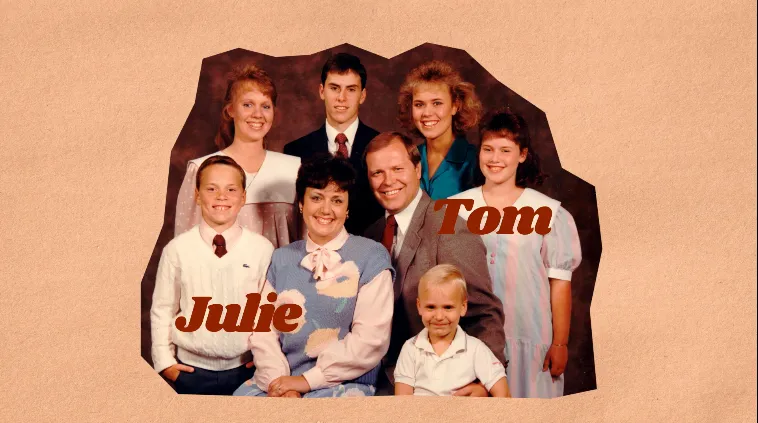
Jill Lewis is the mother of No Sleeper Co-Founder, Ramsay Chancellor.
Jill figured out her guiding principles for life at a young age: prioritize family and work hard. As the oldest of 4 kids, she wanted to be there for her younger siblings while their parents navigated a tough divorce. Once the dust settled, her father and stepmother, Dick and Suzy, had 2 kids come live with them. Dick owned an Exxon station and put Jill to work at 14.
Years later, Jill met Duke, and they fell in love and had 2 babies. Ramsay in 1996 and Ryan in 1999. Life was good... until it wasn't. By the time Ramsay was 13, Jill was a single working mom.
While there were many hard years, there was also a ton of love and fun times. Here is an insight into how Jill raised Ramsay, all on her own (spoiler alert: she relied on her family!)
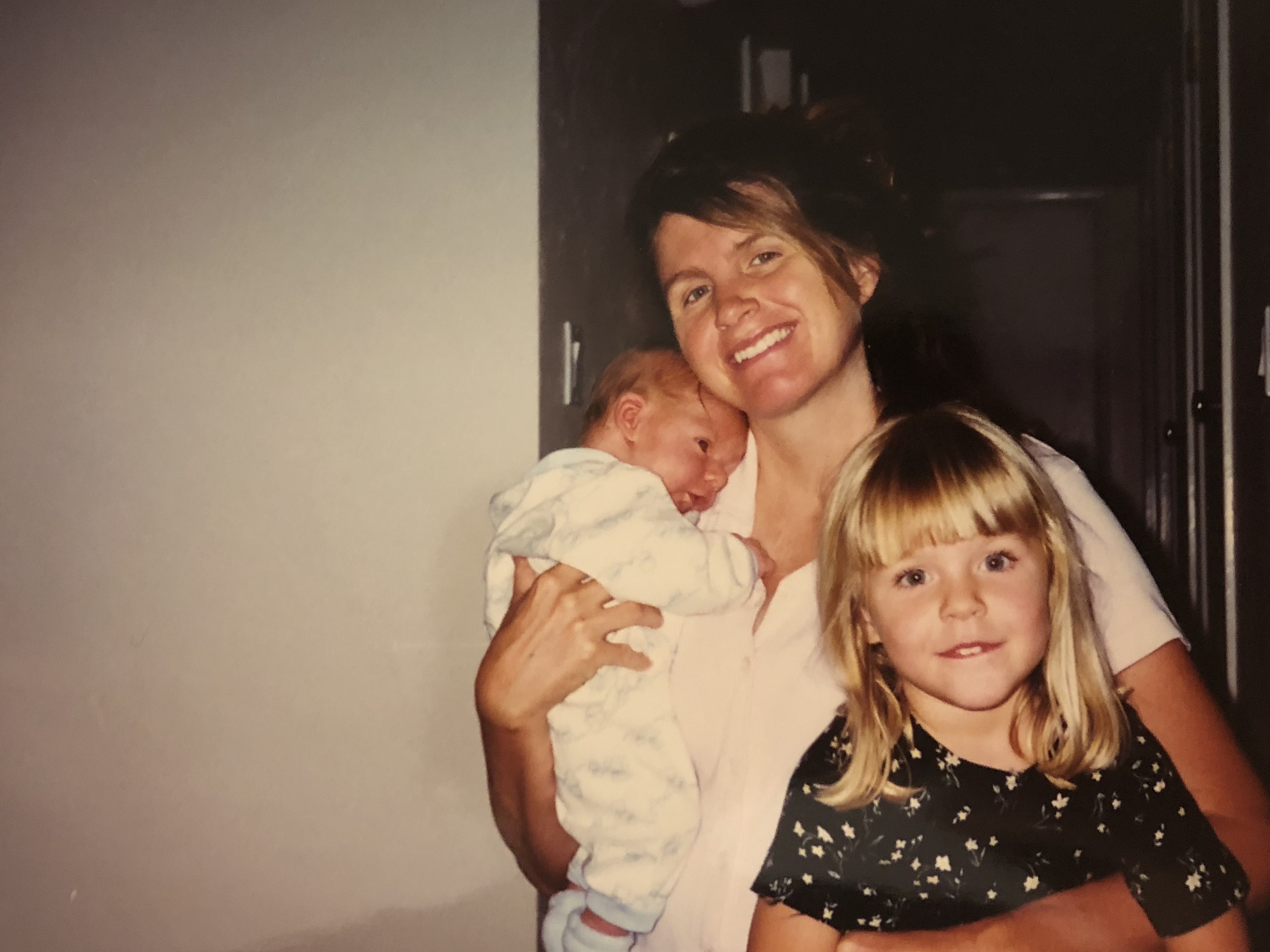
How was your relationship with your own parents?
Jill:
My parents are Dick Reid and Marie. My relationship with my parents is really good. Really good. I've made a conscious effort to have a good relationship with my parents. And I feel like my life has followed the same pattern as my parents. Not intentionally.
It was a different time. They got married in their 20s and started having babies right away and... who knows, that might've put a strain on a marriage. I don't know. Yeah, they got divorced. I was the eldest. I felt like I needed to keep the family together.
Dick married Suzy. And in the 90s, Mom married Jim. I lived with my mom for a while, all four kids, and my mom could see that we were starting to get into trouble, Andy and I. And then Dick and Suzy said, "We'll take kids." So we went to go live with my dad, and I was deathly afraid of him. So I was on the straight and narrow. And I had a stepbrother and a little brother, who were just fucking idiots.
They kept getting in trouble. And I'm like, "I am not gonna be them. I'm not getting in trouble." So I was the good little, they always tease me, good little girl, never doing anything wrong. And I went to work at the station at 14. You know, wanted to make my dad proud of me, so I was working a lot, and making money. I had extra money to spend, so that was fun growing up.
And I've tried, you know, my parents split up, but I've always tried to do equal things with them. I think they did the best that they could.
Duke and I were like, okay... Well, first of all, through my 20s, I was never getting married and never having babies.
I hit 29. And all of that went out the window. Like, my clock was ticking, and I had to have babies.
So, we started to get pregnant, and Duke and I were like, okay, we're gonna do it completely different than our parents. No McDonald's every other night. Do other things, be there for our kids, all of that. Of course.... You didn't have McDonald's ever.
Ryan just brought up a memory last night of being at the house on Marion, and Grandma Marie bought you a happy meal. And Duke and I came home, and we were so livid with Grandma because you were just enjoying the shit out of a happy meal. "Mom! We do not do McDonald's in this house."
And Ryan was just like " oh, I was scarfing that down so fast, because I thought you were gonna take it away."
Other than that, you know, we had to have, I had to have family around. I knew that that was important. You know, I think it was good. You had a great early childhood, I think.
Did you have a philosophy going in to parenting or did you go with your gut?
Jill:
Duke and I got married in '93. Had babies in '96 and '99, Ramsay and Ryan. It was great until it wasn't, and then in 2008, we were divorced, and that was hard. Really, really, really hard.
Mostly, a lot of it's your gut, right? And a lot of it is how you were raised. And also talking with your partner about how to handle situations. In the heat of the moment, I'm a yeller. And so is your dad. So you guys got a fair amount of yelling, getting yelled at.
So when you were older, in high school, and, and Ryan too, this is me on my own. You were teenagers and getting into things that you shouldn't have been getting into. And I remember, you went out on New Year's Eve. We were going hiking on New Year's Day. You came home. I could tell you'd been drinking, wasn't okay with it. I didn't lose my cool. I just said, "get up. We're going hiking."
You're like, "I don't want to."
Hmm. It's all about choices. You knew we were hiking, and you did this anyway, and you're going hiking. And we went hiking, and you
were, like, throwing up on the trail, and I was like, "hm, sorry about that." I was trying not to lose my cool, because I was, like, worried, but I think that stuck with you. Like, you make commitment. You're gonna follow it. No matter how you feel.
So, that's one of the reasons I use my gut.
Ryan would do stupid shit. I'd take his phone away. I took the door off of his bedroom for a year, he reminded me. Cause he was making poor choices. It sticks with you, and I didn't have to yell. I didn't have to spank. At that point, you can't spank your kids as when they're in high school. You just have to do things, and I just thought, okay, this is what I'm gonna do. And I think that they've remembered.
Hopefully, they didn't try and do it again. Ryan, it took a while, but Ramsay, I think was a lot like me, like, didn't want to disappoint me. So didn't tell me a lot of things, but didn't get into a lot of trouble.
Did your kids have chores or jobs growing up? How did you handle money and work ethic?
Jill:
Ramsay had chores. And I don't think I paid her for it. Whenever you needed something, we saved and we made it a priority.
I can remember, you were on the volleyball team, in high school. And were selling cookies. And wanted to sell enough cookies to get this hoodie with her name on it. We're trying to sell this expensive ass cookie. And we didn't have enough. So I ended up buying enough cookie dough.So she could get her hoodie, which I think I still have.
Ramsay:
You're like, "I'm not getting rid of that."
Jill:
And we ate cookies for dinner some nights. No, we didn't, but... I spent a lot of money I didn't have so she could get a hoodie.
And I'm like, "We should've just bought a stupid hoodie with your name on it."
But anyway, those are, that's just a funny story that I remember about, money.
Work ethic. I worked all the time. But I had a good job, and I had weekends off. So to me that's a good job. I grew up where we worked 24/7, 7 days a week.
We did things on the weekend, and we celebrated and did things with the family. You know, I used, we used grandma a lot. Grandma would share the cost so we could go to Mexico, and we could do some fun things, go to California. I feel like there were great memories that we had.
And then we had, I had to get out from the house. I couldn't afford that house. If one bad thing happened, like the air conditioning went out, or the pool broke, there was no way I could afford it. I mean, this is hard to talk about...
Me and your dad, we're butting heads, and... He wouldn't sign the papers. I had the house sold a couple of times, and he wouldn't sign the papers, relinquishing. Because his name and my name were both on the deed. He wouldn't sign the paper, so I had to stay in the house.
So, you were sophomore, and my work was telling me that I had to commute to North Phoenix. So that commute would have been, like, 70 miles one way from Chandler. So I used that to instigate selling the house again. And your grandma, Bonnie (Dukes Mother) I had to ask her to help me.
"I have a buyer for the house. The house is for sale, and I have to have you help me get that signature. I have X, Y, and Z that has to happen. And I can't commute that long."
We had to have the papers couriered up to him, and Bonnie had this conversation with your dad, and got him to sign the papers.
I will be forever grateful to your grandma Bonnie for getting that done for me, for us. And then we had to move.
How did you handle discipline? Tell us about a time it didn't work?
Jill:
Like it said, I... I yelled a lot. And looking back, now I know that yelling is so not effective.
But Ryan said a cool thing to me. "People can't believe that we can yell at each other, like, right in each other's faces? Even with my sister, Ramsay. We can be in each other's faces. And five minutes later, we can apologize and agree to certain things or not agree to certain things. That's kind of what I learned from all the yelling, mom."
Because I yell and we forget it and we move on. And hopefully learn from it.
Ramsay was a good girl. She listened to me. most of the time. I gave you guys enough leeway. To experience. Make choices. That was the key to my discipline. I can tell you, explain to you, X,Y, Z is gonna happen when you do that, but you're not gonna believe me. So, beware.
As you got older, you know, teenage years were hard. A, because of the divorce, B, because you were teenagers.
Ramsay:
And C, we moved.
Jill:
Yeah. And that was a big deal for you. I have a story I'd like to share about, we're moving. You're not happy about it. You're leaving all your friends. You're a sophomore in high school. You've got your routine, and, why are we doing this? And I had 10 reasons why.
We're taking a family vacation. We're in Utah at, um, Moab. Ryan, Ramsay, and me. And Ryan was a shit. He stayed in the car. We're gonna go on this hike. He said "Nope, not gonna do it. I'm gonna nap."
Fine.
So it's me and Ramsay taking this hike, and... We're gonna move after the vacation. I'm like, you know, X, Y, Z. We gotta move, we gotta do it. She's just like, "Mom. Can you just let me be sad? I know we have to move. Just let me be sad that we have to do this. Because I'm really sad."
And I just had to shut up. And I thought, okay. Ramsay's a grown up. She's growing up. She's learning that things ain't always gonna be great. And I was just kind of awestruck with you, that you said that. You could say that with confidence. You've decided, okay, I've got to do this. There's no more complaining. I can't change it.
"You know people, you're only 10 miles away. It's not like the end of the world." Blah, blah, blah. I was saying all this stuff.
"You're just like, I know all that, Mom. Just let me be sad. I don't want to do this."
So, I appreciated that, and it told me that you were growing up, and making hard choices.
And then later, about a year later, you said, "This is the best move we've ever made, Mom. Thank you for making me move." So that made my heart happy.
How did you praise Ramsay? Did you focus on effort, results, or talent? Did you think about it consciously?
Jill:
I thought about it all the time. I wanted to build my kids up, especially after the divorce, so I thought about praising all the time. I felt I did a good job of it. But, you know, in reality, I didn't praise you... I praised your effort, even if it didn't turn out great.
You've got to try. In my constant talking to you guys, you've got to try. You've got to at least try, you know, you can't... You can't do nothing. You've got to give your best effort.
You're not gonna sit here and do nothing. You've got to do something. And I think that has stuck with both of you. Experience life. Because we're finding out how short it is, and find the thing that brings you the most passion.
How did you handle it when Ramsay fell in with friends you didn't like?
Jill:
Look, I thought Ramsay's friends were all great. Looking back, they weren't so great. But at the time, maybe that's.... you needed them, I felt.
Until she met Jake, one of her best friends.
There was friends in high school where they probably weren't the best influences on you, but then you were a good influence on them. Like, I remember you were telling me you take this girl hiking. She wouldn't move. Like, you gotta move.
Yeah, there was another girlfriend who kind of did you dirty and... Yeah, I didn't like that.
Jake:
Did you mention anything to Ramsay about, you know, maybe you didn't like her friends or things like that?
Jill:
So what was the, what was my motto after the New Year's Eve thing? You don't get to spend the night. No spending the night. Ever. Because guess what? All you want to do is get into trouble if you spend the night. And you don't tell these parents, and these parents don't know? Why in the world, what I allow you to spend the night?
You used to spend the night over in our old neighborhood, but once we moved, I was just like, "we're done. Your coming home, you have a curfew". And that was that.
That was discipline. And they didn't like it.
How did you handle it when Ramsay failed at something?
Ramsay was never a disappointment. Ramsay knew when she was disappointed and didn't do as well as she thought. Ramsay beat herself up, more than I ever would. I tried to praise her and pump her up.
I remember, you had an English teacher in high school, that was so difficult and hard, and you were like, I hate her, I hate her, I hate her. And I'm like, why don't you just go talk to her. And you ended up calling her your best teacher you ever had, because she taught you how to write, and she was strict and tough. But once you built a little relationship with her, it... you became better.
I want to tell the story of junior high. You had a social studies teacher, and you had this project, several projects. Ramsay loved this teacher, and she would do her presentation for us at home. I think she learned a lot from that teacher, too. Just, um, being... doing your research. And then making it personal, like, put your own spin on it.
So she had to do Adolf Hitler's Mistress and Eleanor Roosevelt. Because it was the two leaders at the time, and do the wives have any say with these people, these powerful men? It was, it was the best presentation.
Ramsay:
Wow, you remember that.
Jill:
That's a great story of me just saying, "go talk to him."
What's something you got wrong? What would you do differently?
Jill:
Hmm. I didn't get nothing wrong with Ramsay. Ramsay came out of the womb, very independent. Gonna do things her way. I think her dad and I embraced that from the very beginning. She wants to wear what she wants to wear, we let her. She wants to be naked, we let her.
What would I do differently? Ramsay, in her later years, she's become very anxious. And I wonder if I could have done anything different to make her not so anxious. And... I don't know what that would be.
Could I have spent more time with her? I was not a very girly girl. She did not end up being a very girly girl, but more than me. You know, we didn't go shopping together. We didn't worry about makeup and all these girly things that I know a lot of mothers and daughters do, so could I have done it a little different? Would she have appreciated it more?
I don't know, but... I don't know what I would have done differently.
How much of it do you credit to your parenting, versus who your kid already was?
Jill:
Look, being a child in a divorce is hard. Could I have done it differently? Amen. I was so focused on the breakup of a marriage. But I was really concerned about my kids, but it was affecting me, too. And I held a whole lot of anger, and I could have done that differently, I think.
I don't think I'd do much different.
Like I said, Ramsay came out very independent. I honestly think that it's... 50/50. Like, I see it in Quincey. Quincey wants to do things her way. She knows, like you knew.
"I don't want to do that. Or, yeah, I want to do that."
But then, it's the people around you, like, your aunts, your uncles, your grandparents, your cousins, they help you become who you are. I think.
And I, you know, I think I had a little bit to do with that? And so did your dad, you know? You have traits from both of us. I see it.
Ramsay:
What's one trait for me and one from dad?
Jill:
You're not a girly girl like me. And... you... you can spin an argument, just like your dad. But in a good way, you make me think a lot. When I complain about something to you, you spin it, and I'm like, oh, well I never thought about it like that.
Ramsay:
For good, not for evil.
Jill:
Right. You could be a little more positive. That's from your dad. I'm very positive.
What traits do you think you have? You have good work ethic.
Ramsay:
Yes.
Jill:
From your mom. You value family.
Ramsay
Yeah and you're, like, kind. You'll go out of your way to be kind. And I think I can do that. But I think I can be stubborn, like my Dad. And I remember my dad, it annoyed me so much. "Why can't you just..."
Jill:
But to me, that's independent. She knows what she wants.
Jake:
Well, Ramsay just needs to figure it out her own way.
Ramsay:
Since she was this big. This big.
What's the one thing you'd tell a new parent who wants their kid to turn out like Jake?
Jill:
Being a parent is hard work. As you all know. I think just being consistent, being able to communicate. You know, in the beginning, there's lots of questions.
"Why, why? why?"
There's taking it to extremes. "Why? Well, in the beginning, we were all amoeba, and we became humans, right?" You don't have to give that level of "why". You can give an answer to a question, like a quick hit, when you have a toddler. And it be done, and then you can build on that, as you grow older.
You might think, as a parent, I've got to give the best answer I can to a "why". "Why is it this way?" And I don't think you have to. I think that's a... to the kids level of maturity.
You can have an answer... "Remember when we talked about it? Well, here's a little bit more to the story." Just being able to have a continuous conversation about why things are, because, let's face it, Quincey's growing up in a crazy time, and you're gonna have to answer questions.
But you don't have to give her the birth of the nation. You can give her, "oh, it's this way. Because those are the rules and the laws. You know, the rule about we go to bed at eight. These are rules."
Ramsay:
Like I think of when you got divorced. You told your eight year old, Ryan, something different than you probably told your 13 year old, me. Because we had different “why?” questions.
Jill:
I did.
Ramsay:
And you had to know your kid and know what they can handle.
Jill:
Yeah. And you do know your kid. It's, kind of this wonderful, innate feeling that I know this person better than they know themselves. And I can clockwork what they need and when. But as they get older, that may change, and you've got to roll, you've got to evolve with your kids, and just be that consistent person, there for them.
I think you know that you could call me with whatever. And I can be there. I'm living my life. You're living your life, but know that there's this connection that will never break.